
Money Matters, Simplified.
Patients’ own tissue grafts to treat kidney dialysis

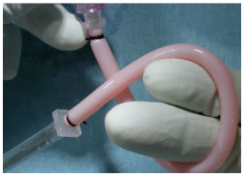 The tissue-engineered grafts are expected to last between one to five years as compared to plastic tubes which fail every 12 months
Los Angeles, April 24: In a novel breakthrough, doctors have grown blood vessels from patients' own cells for use in kidney dialysis. This is likely to make the use of dialysis machines much easier and quite safer.
The lead researcher of the study, Todd McAllister of Cytograft Tissue Engineering of California, along with his colleagues, successfully implanted grafts made from patients’ own cells in 10 seriously ill patients with kidney disease. This was done from 2004 to 2007 in Poland and Argentina.
“We had extremely good long-term performance,” claimed Dr. Todd McAllister.
The tissue-engineered grafts were tested in kidney dialysis patients. These grafts are grown over six months’ time and did not contain any foreign material.
A number of kidney dialysis patients get their blood filtered either through access graft or using any plastic tube, which is not very successful. It is because there is a risk of inflammation as well as infection. McAllister has a solution to offer- making custom-made grafts from patients’ own cells.
“What we have done is provide something that has no foreign material, therefore minimizing or eliminating the foreign body (rejection) response so the body doesn't degrade the tissue,” stated McAllister.
“The fact that there is no synthetic material makes this novel,” he affirmed.
During the study, researchers checked the grafts for safety and stability. Three grafts failed during an initial three-month safety phase of the study, which is quite normal, especially in the high-risk patients, said McAllister. One patient moved out of the study trial after severe stomach bleeding, while one died due to some other reasons.
The remaining five patients were followed for six to twenty months of time period. Out of these five, only one required surgical correction to keep the shunt (graft) open.
The new technique of tissue-engineered graft is expected to last between one to five years as compared to plastic tubes which fail every 12 months, stated McAllister.
He agreed that although the latest process is a bit expensive, it is still cost-effective considering the life-expectancy of the graft. The patients will have to wait for another three to four years to make use of this new innovation, felt McAllister.
The study is published Friday in the medical journal Lancet.