
Money Matters, Simplified.
World Updates
Aerographite: The New Lightest Material in the World
Wed, 18/07/2012 - 17:29 by RESHMI CHAKRAVORTY
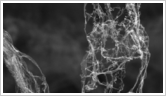 Scientists of Kiel University (KU) and Hamburg University of Technology (TUHH) have named their joint creation “Aerographite”, which is the new lightest material in the world. |
Sneaky rodents, blessing in disguise for the growth of tropical forests?
Tue, 17/07/2012 - 19:06 by Minnie Mahendru
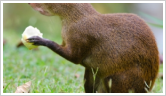 The vanished gigantic gomphotheres which are animals similar in looks to the extinct elephant, like the Amebelodon once stretched the breadth across the America spreading seeds of big trees as they swayed along different places, aiding in the process of pollination. As these mammoth animals are now dead and buried, how are the seeds being spread now? A report published by the science experts in the Proceedings of the National Academy of Sciences, has indicated that radio tags had been utilized by the scientists that clearly point towards the rodents that carry and then hide the tree seeds deep in the ground. |
Intensifying acid level in the sea is a stunning menace for the coral reefs and sea life
Tue, 10/07/2012 - 16:02 by Minnie Mahendru
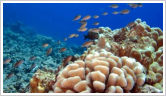 Acidification of the ocean has materialized as one of the prime hazards for the coral reefs spread worldwide. The superfluous carbon dioxide in the atmosphere has slipped into the recesses of the oceans universally and has lead to an alarming increase in the acid level of the deep-sea bodies that has the scientists stunned. |
Diminutive volcanic flare-ups can also chill the climate worldwide!
Fri, 06/07/2012 - 17:44 by Minnie Mahendru
Small and trivial volcanic explosions have the capability of discharging a large number of aerosols freely into the environment to influence temperatures worldwide. Earth’s atmosphere is laden with aerosols like dust, smoke, pollen, micro organisms, ashes and a lot more. The volcanic eruptions boost the most commonly found aerosols–the clouds, which are waiting to spray the water droplets they carry, all around. |
Drastic climate changes are resposible for unavailability of 2,500 years of reef growth data
Fri, 06/07/2012 - 17:22 by RESHMI CHAKRAVORTY
Extreme climate condition drove coral reefs to a halt which lasted thousands of years, according to a study published this week in Science. |
Can time be turned back by the "larvae responsible" mature honey bees?
Wed, 04/07/2012 - 17:42 by Minnie Mahendru
Swindling older, scavenge bees into doing community activities inside the hive causes changes in the molecular structure of their brains. Science experts at the Arizona State University have ascertained that adult mature honey bees can successfully reverse brain aging when they acquire nest responsibilities that are normally undertaken by the younger bees. |
PERPLEXING “TOMBED” STONE FORMATION IN SYRIAN DRY WASTELANDS BAFFLE DIGGERS
Wed, 27/06/2012 - 14:26 by Minnie Mahendru
A prehistoric countryside backdrop created by standing stones placed in a circular pattern, some stones placed in a linear arrangement, and probable burial places are spread out in the Syrian desolate dry wastelands claims a Royal Ontario Museum archaeologist. He went on ahead to call the unexplained and puzzling stone formations in the Syrian Desert as "Syria's Stonehenge“ after the English prehistoric monument Stonehenge at Wiltshire. |
Flatfish Fossil remnant astounds with eyes on opposite side of head!
Tue, 26/06/2012 - 13:25 by Minnie Mahendru
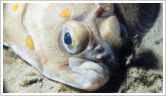 An original fossil remnant unearthing by Dr Matt Friedman, paleobiologist with the Oxford University shines in the Journal of Vertebrate Paleontology. Friedman's remnant evidence fossil fish the Heteronectes was exposed with both eyes on reverse sides of head. It was unearthed in old marine rocks from northern Italy that are dated almost 50 million years ago. |
Humans can be put to shame by dolphins, elephants and apes with their sheer intelligence
Mon, 25/06/2012 - 17:12 by RESHMI CHAKRAVORTY
Humans have the opportunity to learn not only from our primates; but also from dolphins, dogs and elephants as they exhibit immense brain power. |
Google launches 'Endangered Languages website' to save 3,000 at-risk languages
Fri, 22/06/2012 - 17:06 by RESHMI CHAKRAVORTY
7,000 languages are spoken worldwide today, but alas the researchers believe half of those will fade over the next century. Thus the Google's official blog has launched 'Endangered Language Project' in a bid to combat the fateful situation. |
Australia leads the way for world's largest marine park
Mon, 18/06/2012 - 16:24 by RESHMI CHAKRAVORTY
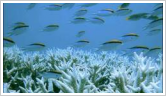 The world's largest network of marine parks to protect ocean life, with limits placed on fishing and oil and gas exploration off the coast are being planned by Australia. |
Human ancestor may have had a shark head
Thu, 14/06/2012 - 17:08 by RESHMI CHAKRAVORTY
A new analysis found out that the controversial class of animals was more shark-like than expected.Categorically, this now-extinct fish was among the first to split from sharks, whose bones are made of cartilage, to evolve into a line of tough-boned species that includes everything from bony fish to human beings. The brain case of a 290-million-year-old fossil fish (Acanthodes bronni) that has long puzzled paleontologists threw light on this evolution. |