|
Thu, 27/01/2011 - 10:40 by Jaspreet Virk
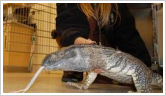
A five-foot long monstrous lizard roams the streets, and makes heads turn as it passes by. Wondering if it's the scene from a movie? No, it is not.
|
Tue, 18/01/2011 - 13:59 by Jaspreet Virk
You might share same interests and passions, but there is more to friendship than this, as a new study states that we choose our friends based on their genes.
|
Mon, 17/01/2011 - 12:11 by Priyanka
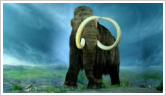
Woolly mammoth, an extinct species of mammoth elephants, could become a reality in roughly four years time, according to professor Akira Iritani from the Kyoto University in Japan.
|
|
Fri, 14/01/2011 - 11:59 by Priyanka
Many students suffer from pre-test blues, which in turn sometimes severely affects grades. According to a new study, these anxiety-blues can be easily dealt with. All one needs to do is to spend 10 minutes writing down his/her fears/worries/negative thoughts related to exams.
|
Mon, 27/12/2010 - 12:06 by Priyanka
Ever wondered how some people smoothly manage large and complex web of social contacts in their while others struggle with even few? According to a new study released recently, an almond-shaped nuclei group (called amygdala) situated in the medial temporal lobes of the brain might be the reason behind some people’s bustling social life.
|
Tue, 21/12/2010 - 11:59 by Priyanka
According to a new study released Monday, numerous dinosaurs’ species, previously believed to be strictly carnivores, were vegans who ate plants rather than animals.
|
|
Mon, 20/12/2010 - 14:33 by Anter Prakash Singh
The remains found on a remote island, 1,800 miles off the cost of Hawaii, can unravel the mystery behind the disappearance of Amelia Earhart, who went missing when she took a flight in an attempt to fly across the equator.
|
Mon, 13/12/2010 - 07:24 by Prince damin
Norfolk, Va. -- Volunteers in Virginia and North Carolina say they've been busy rescuing cold-affected sea turtles and finding them temporary homes in aquariums.
A sudden onset of freezing temperatures has caught many of the creatures too far north and left them lethargic and unable to move.
"I think the temperature's just dropped so quickly that they haven't gotten out yet," Christina Trapani of the Virginia Aquarium & Marine Science Center told the (Norfolk) Virginian-Pilot. "They should be going somewhere warm."
Cold weather stuns some turtles every year, said Mark Swingle, director of research and conservation at the aquarium, but the number of turtles this year is "a little unusual."
|
Sun, 12/12/2010 - 00:17 by Prince damin
Kristianstad, Sweden -- Powered by food waste, manure and cooking oil, a Swedish city has drastically cut its fossil fuel consumption.
Kristianstad and its surrounding county, with a population of 80,000, burn practically zero oil, natural gas or coal for heating, The New York Times reports. Twenty years ago, all its heat was derived from fossil fuels.
The agricultural region generates energy from ingredients such as potato peels, manure, used cooking oil, stale cookies and pig intestines. A plant outside Kristianstad uses a biological process to convert the refuse into biogas, a form of methane, which is then burned to produce heat and electricity, or is refined as a fuel for cars.
|
Sat, 11/12/2010 - 22:49 by Prince damin
Alphen Aan Den Rijn, Netherlands -- A biologist in the Netherlands said recent experiment that tested the health of trees related to WiFi transmission exposure was not definitive.
"We have to be very careful what kind of conclusion can be drawn. (In fact), we cannot draw conclusions," said Dr. Andre van Lammeren, an associate professor of plant biology at Wageningen University, The Wall Street Journal reported Saturday.
Lammeren placed 25 small trees in two separate cabinets, exposing one group to WiFi transmissions. Three months later, the exposed treeshad higher incidents of leaf damage.
|
Sat, 11/12/2010 - 06:51 by Prince damin
London -- British scientists say they plan to collect wild plant relatives of essential food crops including wheat, rice and potatoes to preserve their genetic traits.
The project, coordinated by the Global Crop Diversity Trust, aims to safeguard valuable genetic traits in wild plants that could be bred into crops to make them more hardy and versatile, the BBC reported Friday.
The plant material collected will be stored in seed banks in the long term, but will also be used in "pre-breeding trials" to find out if the wild varieties could be used to combat diseases already threatening food production.
"There is a real sense of urgency about this," said Paul Smith, head of the Millennium Seed Bank at London's Kew Gardens.
|
Sat, 11/12/2010 - 06:42 by harsheeb
Cambridge -- Although our brains reach full maturity in our early 20s, face recognition doesn't fully reach its peak until age 30 to 34, U.S. researchers say.
Most researchers think word skills, memory and other mental functions crest in the early 20s, but in a surprising study, scientists found face learning -- the ability to remember new, unfamiliar faces -- takes about a decade longer to fully develop, ScienceNews.org reported Friday.
"Specialized face-processing in the brain may require an extended period of visual tuning during early adulthood to help individuals learn and recognize lots of different faces," psychology graduate student Laura Germine of Harvard University says.
|