Money Matters, Simplified.
Science & Medicine
|
|
Rare species of microbes unearthed on unfriendly South American Volcanic Mountains
Tue, 12/06/2012 - 10:15 by Minnie Mahendru
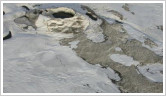 The tallest South American Volcanoes in the Atacama region, with hardly any snow are under the microscope this time. These South American volcanoes with dry soil have no nutrients. These mountains have a top resembling the Martian-like landscape. Researchers are perpetually on the lookout for organisms residing in the most unfriendly dirty surroundings. The DNA analysis of the mountain soil has showed up a cluster of bacteria, Achaea and fungus communities. |
|
|
|
|
Study unravels how mosquitoes survive in rain
Tue, 05/06/2012 - 11:25 by Jamie Anderson
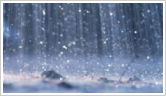 What will happen if a human being is hit by a bus? In all probability, the human being will perish. Now, consider a comparable situation in which raindrop, weighing as much as 50 times a mosquito, falls on the insect. The answer, many would say would be that, akin to the human being, the mosquito would also perish. |
'Olympic rings' molecule olympicene in striking image
Wed, 30/05/2012 - 13:50 by Nikita Berry
 Olympic rings enters into science and gets successfully captured by researchers to show its stunning beauty. |
Fresh batch of hacked climate change emails hits internet
Wed, 23/11/2011 - 16:32 by Jaspreet Virk
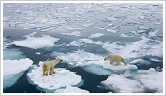 Exactly two years after hundreds of climate change emails were hacked from University of East Anglia's Climatic Research Unit and released online, a fresh batch of hacked emails has hit the internet. |
Scientists create world's lightest material
Sat, 19/11/2011 - 15:37 by Neka Sehgal
 A team of researchers claim to have developed the lightest solid material on earth, a “metallic microlattice" that is feather-like and stiff as a board. |
Ralph Steinman wins posthumous Nobel for medicine
Tue, 04/10/2011 - 19:42 by Neka Sehgal
 Four days after he succumbed to pancreatic cancer, immunologist Ralph M. Steinman was awarded the Nobel Prize in medicine for his discoveries about the human body's immune system. |
Arctic sea ice recedes to 2nd lowest level -- report
Mon, 19/09/2011 - 13:21 by NeelamGoswami
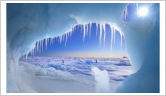 Arctic sea ice has shrunk to its second-lowest level on record, the National Snow and Ice Data Center (NSIDC) revealed last week. |
Aliens may kill earthlings for global warming -- scientists
Mon, 22/08/2011 - 14:39 by Neka Sehgal
 With human efforts failing to make a serious dent in the problem of global warming, it seems aliens might soon take up the challenge. |