
Money Matters, Simplified.
Healthcare
|
|
|
40 million Americans drive drunk or drugged--survey
Fri, 10/12/2010 - 13:19 by Neka Sehgal
 A new federal survey delving into the driving habits of people 16 years and older, found more than 30 millions drove under the influence of alcohol while over 10 millions were high on drugs when behind the wheel in the United States last year. |
Lifting weights safe for breast cancer survivors--study
Thu, 09/12/2010 - 15:59 by Neka Sehgal
 Contrary to popular belief that heavy lifting of any kind may worsen the lymphedema in breast cancer survivors, a new study suggests that a gradual training program may be an effective option and actually help patients with painful swelling in their arms. |
Meeting friends at church may make you happier--study
Wed, 08/12/2010 - 17:55 by Natalie James
 Going to church regularly may make you happier and your life more satisfying, suggests a new study. |
Why the Street Should Love King Pharmaceuticals' Earnings
Tue, 07/12/2010 - 12:17 by Seth Jayson
 Although business headlines still tout earnings numbers, many investors have moved past net earnings as a measure of a company's economic output. That's because earnings are very often less trustworthy than cash flow, since earnings are more open to manipulation based on dubious judgment calls. |
Elizabeth Edwards on deathbed; ends cancer treatment
Tue, 07/12/2010 - 12:08 by Natalie James
 Elizabeth Edwards, the estranged wife of former presidential candidate John Edwards, is seriously ill as her cancer has taken a sharp turn for the worse and she may have just weeks to live, according to the Associated Press and other tabloid reports. |
Lesbian, gay, bisexual teens more likely to be punished, arrested
Mon, 06/12/2010 - 20:18 by Natalie James
 Lesbian, gay and bisexual (LGB) adolescents in the United States are more likely than their straight peers to be punished by their school, police or the criminal justice system for the same transgressions, according to a study published Monday. |
72,000 pounds of canned chicken salad products recalled
Mon, 06/12/2010 - 17:18 by Neha Gupta
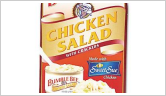 The Suter Company Inc., a Sycamore-based company, has recalled almost 72,000 pounds of canned chicken salad products, the U.S. Department of Agriculture’s Food Safety and Inspection Service (FSIS) announced on Sunday. |
Annual Mammogram lowers rate of Mastectomy--study
Sat, 04/12/2010 - 19:02 by Neka Sehgal
 The annual ritual of a mammography among breast cancer survivors between the ages of 40 and 50 years may reduce their risk of mastectomy, claims a new study. |
Repeated miscarriages may raise heart attack risk--study
Thu, 02/12/2010 - 18:51 by Natalie James
 Women who suffer repeated miscarriages are at an increased risk of heart attack later in life, finds a new study. |
|