

Sunday
Dec 16
|
|
||||
|
Sunday Dec 16
|
|||
| |
||||
Microsoft Unveils Second-Gen Zune Media Playerby Shubha Krishnappa - October 3, 2007 - 0 comments
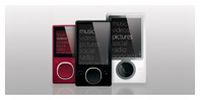 Software giant Microsoft on Tuesday introduced new versions of its Zune portable media player, in an attempt to grab the monster share of the digital music business pioneered by its chief rival, Apple Computer Inc. The recently unveiled expanded line of portable digital media players includes three new models of Zune portable media players- Zune 80GB hard-drive model, the ultra-portable Zune 4GB and Zune 8GB. Available in black, the 80GB hard-drive model has a 3.2-inch screen and it comes with premium headphones. Priced at $249.99, the black Zune is 27 percent smaller than the original $199.99 Zune, which had a 30 GB hard drive and a smaller screen. Both, ultra-portable Zune 4GB, which will cost $149.99, and Zune 8GB, which will sell for $199.99, are smaller, flash-based players and will be available in pink, green, black and glossy red. These flash-based versions of its flagship digital music player Zune are similar in shape and size to the original Apple iPod Nano. The second generation of the Zune, scheduled to go on sale in North America in mid-November, features the Zune Pad navigation button, with its touch-sensitive surface and a shiny glass screen. Every Zune device will have a bright color display that is perfect for showing off album art, pictures, videos and podcasts. Like the original Zune, the new models include an FM radio tuner and the ability to wirelessly share songs with other Zune owners. The entire new Zune line will use Wi-Fi to sync music, movies and photos wirelessly and automatically with users' PCs. Besides the new Zune devices, Microsoft will also release in November the updated Zune desktop software, a restocked and redesigned Marketplace store and will launch a beta online community Web site called "Social." The updated version of Zune Marketplace will carry more than 3 million songs, of which more than 1 million tracks will be digital rights management (DRM)-free MP3s that can be played with Zune or any other digital media player. Initially available in beta version, the social networking site ‘Zune Social’ will provide users a platform through which they can share their music tastes, knowledge and experiences with others. “By tapping into customers’ passion for music with Zune Social, we’re starting to change the game,” said J Allard, a corporate vice president in Microsoft's Entertainment and Devices Division. “This lets us start building a new, more valuable kind of relationship with consumers that, combined with other Zune innovations, will start to drive the entire music industry forward.” Users of 30GB devices will be automatically updated with all the new features as well as the new device software design this fall. Launched on November 14, 2006, Zune features a 30GB memory capacity, wi-fi capability, larger screens and built-in FM radio. It can also transfer songs to another Zune using a wireless technology feature. Zune sales hit the one million mark in merely nine months. iPod was launched five and half years ago in the year 2001, since then, there has not been a looking back for Apple Inc., and has continued to introduce ten different iPod models to date. This includes five series of iPod, two series of iPod nano, two series of iPod mini and two generations of iPod shuffle. The first iPod had a storage capacity of 5GB initially, which over the years, has developed and grown to proffer a tremendous capacity of 80GB. Zune has faced an uphill battle against the rapidly-evolving iPod in the digital music market. Microsoft claims to have sold 1.2 million Zune devices during its fiscal year ended in June, while Apple has sold around 41.4 million iPods in nine months period ended in June and more than 110m iPods in the six years since the Apple player has been on the market. In January this year, Market research firm Current Analysis had released results on how Microsoft's digital music player Zune had fared in the market. According to the research results, Apple accounted for 64 per cent of digital audio devices sold during the period, Sandisk for 22 per cent and Microsoft for 3 per cent. |
|
||||||
Disclaimer: The views and investment tips expressed by investment experts on themoneytimes.com are their own, and not that of the website or its management. TheMoneyTimes advises users to check with certified experts before taking any investment decision. ©2004-2007 All Rights Reserved unless mentioned otherwise. [Submit News/Press Release][Terms of Service] [Privacy Policy] [About us] [Contact us] |


