Tuesday
Oct 07
|
|
||||
|
Tuesday Oct 07
|
|||
| |
||||
Even light exercise can improve obese women's fitness - Studyby Poonam Wadhwani - May 16, 2007 - 0 comments
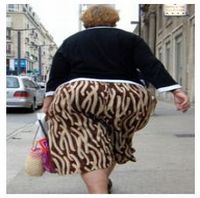 A new study published on Tuesday in the Journal of the American Medical Association (JAMA) suggests that even small amounts of physical activity, just 72 minutes a week, can improve the fitness levels of overweight post-menopausal women. After conducting tests on overweight and obese women, many of whom had high blood pressure, a team of researchers from the Louisiana State University suggested that just 10 minutes of exercise a day can help even the most inactive overweight women, providing a sigh of relief to those for whom obesity is of great concern. "Perhaps the most striking finding of our study is that even activity at the 4 kcal/kg per week level (approximately 72 minutes per week over about three days) was associated with a significant improvement in fitness compared with women in the non-exercise control group," said Dr. Timothy Church, who along with his colleagues authored the study. To reach their findings, Church and his fellow researchers studied 464 overweight women with high or borderline-high blood pressure. Average age of the participants was 57 and none was exercising at all at the start of the study. They were having a body mass index (BMI) of 25 to 43. BMI is a standard obesity measure that divides the weight by the square of the height. A person is classified as ‘obese’ if his or her body mass index (BMI) is 30 or over. From the clinical point of view, obesity is typically evaluated by measuring BMI, waist circumference, and evaluating the presence of risk factors and comorbidities. In epidemiological studies BMI alone is used to define obesity. BMI is a simple and frequently used method for estimating body fat: A BMI less than 18.5 is ‘underweight’ National Institutes of Health (NIH) experts recommend at least 30 minutes of moderate exercise every day. Researchers’ team assigned volunteers to one of four groups: 102 to the control group that would remain sedentary; 155 to a light exercise group that averaged 72 minutes a week of exercise; 104 to a moderate exercise group that averaged about 136 minutes a week; and 103 to a high exercise group that completed nearly 192 minutes of exercise each week. The three exercise groups roughly translate to 50 percent, 100 percent and 150 percent of the current exercise guideline, Church said. The study subjects’ peak oxygen consumption was first measured by the researchers before starting the study, and then again after six months of exercise. After observing the three exercise groups’ data, they found that the women in the light exercise group increased their peak oxygen consumption levels by 4.2 percent, while the moderate exercise group saw a 6 percent rise. The heavy exercise group was the highest scorer, raising their cardio-respiratory fitness levels by 8.2 percent. "This is great news for couch potatoes and for the aging," said Church. "There are people that can't obtain the recommendations for exercise, but now, we see if you can't get 150 minutes a week, you stand to benefit even if you get half that." Although the women in the novel study walked on treadmills and rode stationary cycles, but any activity of comparable energy expenditure like working around the house and yard, swimming, playing in the park with your grandchildren, or other activities that are of a similar intensity to brisk walking, would show similar effects, said Dr. Steven Blair of the University of South Carolina, who also worked on the study. According to American Obesity Association (AOA), obesity is a complex, multi-factorial chronic disease involving environmental (social and cultural), genetic, physiologic, metabolic, behavioral and psychological components. It is the second leading cause of preventable death in the U.S. Approximately 127 million adults in the United States are overweight, 60 million obese, and 9 million severely obese. |
|
||||||
Disclaimer: The views and investment tips expressed by investment experts on themoneytimes.com are their own, and not that of the website or its management. TheMoneyTimes advises users to check with certified experts before taking any investment decision. ©2004-2008 All Rights Reserved unless mentioned otherwise. [Submit News/Press Release][Terms of Service] [Privacy Policy] [About us] [Contact us] |