Tuesday
Mar 04
|
|
||||
|
Tuesday Mar 04
|
|||
| |
||||
Acer Joins the Battery Recall Brigadeby Shubha Krishnappa - April 26, 2007 - 0 comments
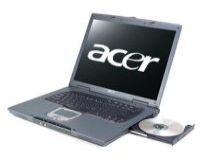 Acer Inc. on Wednesday announced a recall of 27000 Sony made Lithium Ion notebook batteries, adding more to Sony’s battery woes. The move by Acer is the latest in what has been a long drawn chain of recalls by major notebook manufacturers like Dell, Apple and Toshiba, due to overheating of batteries and fire hazard. Acer America, the latest company to warn of faulty Sony-made lithium-ion batteries that could overheat and potentially cause a fire, said the problem occurred in Acer TravelMate and Aspire brand notebook PCs sold in the U.S. and Canada from May 2004 through November 2006. The affected models possibly containing the recalled batteries were the TravelMate series with 4-digit model numbers beginning with 242, 320, 321, 330, 422, 467, 561, C20, and the Aspire series beginning with model numbers 556, 560, 567, 930, 941, 980. Acer, whose U.S. division is based in San Jose, has urged consumers to immediately stop using the recalled batteries and contact the company for a free battery replacement. No users have reported problems with overheating batteries in Acer laptops, and the company found no technical issues after months of testing and investigation, an Acer America spokesman said. The decision to recall the units was made out of an abundance of caution, he added. The U.S. consumer agency, CPSC has logged dozens of reports of lithium-ion batteries overheating. However, none of the known incidents involved Acer’s laptop models but the Taiwan-based company said it is recalling the batteries voluntarily in cooperation with CPSC. Acer says the laptops can still be safely used if powered by the AC adapter. The company has set up a Web site (www.acerbatteryrecall.com/AcerWeb) for the battery recall that lists affected laptop models and offers users instructions about how to get a replacement. Last year, Dell, Apple, Lenovo, Toshiba and other PC makers were forced to recall notebooks using Sony-made Lithium-ion batteries after it came to light that a flaw in Sony's manufacturing process could lead to short circuits, sparks or fire. On August 14, 2006, Sony and Dell admitted to major flaws in several Sony batteries that could result in the battery overheating and catching fire. As a result Dell, which had the most highly publicized incidents of notebook battery issues, recalled over 4.1 million laptop batteries in the largest computer related recall to that point in history. Following suit, Apple Inc., Toshiba, Lenovo and IBM recalled 1.8 million, 34,0000 and 52,6000 Sony laptop batteries respectively in September 2006. The problematic lithium-ion batteries were related to overheat and catching fire hazards in the Dell and Apple cases, whereas Toshiba later clarified that batteries were prone to failing regardless of how carefully it is used, but did not say it had anything to do with overheating or fire hazards. Over 10 million notebook batteries have been recalled worldwide since the problem was traced to Sony Corp. last year. Sony announced a global replacement programme for lithium-ion batteries it made for notebook PC’s in September 2006 in response to growing consumer concerns. Distressed with the massive global battery recalls, Sony Corporation in October last came up with an announcement that the problems caused by the laptop batteries have been fixed and at the same time apologized for the worries and inconveniences faced by the users. But yesterday’s battery recall, which Acer issued in association with U.S. Consumer Product Safety Commission, has delivered yet another blow in a series of setbacks that have shaken consumer and investor reliance in Sony's technological competitiveness. |
|
||||||
Disclaimer: The views and investment tips expressed by investment experts on themoneytimes.com are their own, and not that of the website or its management. TheMoneyTimes advises users to check with certified experts before taking any investment decision. ©2004-2008 All Rights Reserved unless mentioned otherwise. [Submit News/Press Release][Terms of Service] [Privacy Policy] [About us] [Contact us] |