Edison’s classic incandescent light bulb will be soon switched off in California by 2012 if the gauche proposal of Assembly member Lloyd Levine succeeds.
Banning energy-intensive incandescent "saves consumers money, saves the state money and saves energy," said Van Nuys Democrat Lloyd Levine, who calls his measure the "How Many Legislators Does it Take to Change a Light Bulb Act."
However, according to California Energy Commissioner Arthur Rosenfeld, if the classic bulb is replaced by energy saving fluorescent bulbs, the carbon monoxide emissions will only drop by 0.36%.
Levine wants to outlaw the use of the classic bulb, holding that price tags should not be the only motive for the consumers, and a lot other things should be given consideration. He wants the consumer to opt for more energy efficient compact fluorescent lamps or other alternatives such as light emitting diodes (LEDs) and halogen bulbs.
The incandescent light bulb had been a major part of all households since centuries, but recently, they have been targeted as a major piece of meat in many debates.
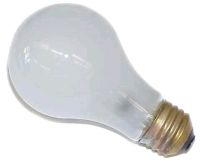
The bulb generates light when an electric current passes through a thin filament, heating it and causing it to become excited, and releasing thermally equilibrated photons in the process. The enclosed glass around the filament forbids oxygen from the environment from reaching inside, which will otherwise annihilate the hot filament by oxidation.
Because of their poor efficacy, theses bulbs are being replaced in many states. Approximately 95% of the power consumed by an incandescent light bulb is emitted as heat, rather than as visible light. An incandescent light bulb, with this ~5% capability, is about one quarter as adept as a fluorescent lamp, which has about 20% efficiency and produces about six times as much heat with the same amounts of light from both sources.
The incandescent bulb is becoming unpopular also due to the extreme heat it produces in summers, and the need for more air conditioning.
Even halogen lamps are gaining popularity, as they are more efficient than the classic Edison bulbs. A 60-Watt halogen bulb provides as much light as a 100 Watt non-halogen bulb. Not only this, the halogen bulb has a longer life. However, the only problem with halogen bulbs is that they get extremely hot due to the surface being close to the filament.
LED bulbs are gaining even more popularity, as it is not only highly efficient; but also last about 60 times longer than the classic bulb. Although they cost more than incandescent bulb, they save money in the long run. LED bulbs are also better than fluorescent bulbs because they contain smaller quantities of harmful metals such as mercury.
The manufacturers of the incandescent bulbs have crossed their fingers and are resisting the proposal made by Levine. But, without doubt, the days of the classic bulb is numbered as the world is marching to become ‘energy conscious’.




The REAL problem...
What about all of the waste from street lighting and unnecessary outdoor business lighting (like car dealers) - much of which goes to light up the sky !?!?!
Banning the Edison bulb is a total joke compared to the real problem. Let's get real!