

Wednesday
Aug 22
|
|
||||
|
Wednesday Aug 22
|
|||
| |
||||
Arctic ice 'disappearing quickly'by Agamveer Singh - December 12, 2006 - 0 comments
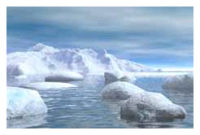 The area covered by sea ice in the Arctic is melting at an alarming rate of 8.59 percent per decade; at this rate there may be no ice at all during the summer of 2040, warn US scientists. According to the latest data presented at the American Geophysical Union Fall Meeting, sea ice that survives the summer and remains year round—called perennial sea ice, is close to a “tipping point” showing all-year-round dwindling of ice. September is the month when the Arctic ice usually reaches at a minimum level. The sea ice reached its minimum extent this year on 14 September, the fourth lowest recorded since 1978, when satellite records became available. Mark Serreze, scientist at the National Snow and Ice Data Center at the University of Colorado in Boulder revealed that, last month the sea that was frozen covered an area that was two million sq km less than the historical average. Moreover, a new study by a team of scientists from the National Center for Atmospheric Research (NCAR), the University of Washington, and McGill University warned that the increasing global warming could weaken the ice system to such a degree that it soon accelerates its own decline. "As the ice retreats, the ocean transports more heat to the Arctic and the open water absorbs more sunlight, further accelerating the rate of warming and leading to the loss of more ice," Dr Marika Holland, a scientist at the National Center for Atmospheric Research explained. Computer simulations of climate and ice show that if greenhouse gas emissions continued at the current rate, only a small portion of the permanent ice pack would cling in the summer season around the northern coastline of Greenland and Canada by 2040. In one simulation, the September ice shrinks from about 2.3 million square miles (6 million square km) to 770,000 square miles (2 million square km) in a 10-year period. ENVIRONMENTAL IMPACT Although geographically isolated from most of the inhabited areas, melting Arctic ice could change the world's ecosystem including sea and surface life, weather, shipping patterns and even national defense needs. Further, the lack of cooling weather from the Arctic ice could change weather patterns elsewhere. However, scientists are of the view that by limiting human greenhouse gas emissions, the rate of Arctic ice melting can be slowed. |
|
||||||
Disclaimer: The views and investment tips expressed by investment experts on themoneytimes.com are their own, and not that of the website or its management. TheMoneyTimes advises users to check with certified experts before taking any investment decision. ©2004-2007 All Rights Reserved unless mentioned otherwise. [Submit News/Press Release][Terms of Service] [Privacy Policy] [About us] [Contact us] |



