

Friday
Apr 11
|
|
||||
|
Friday Apr 11
|
|||
| |
||||
Capital of India under dengue threatby Gunika Khurana - October 2, 2006 - 0 comments
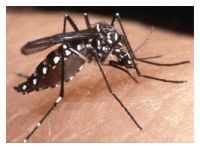 Dengue, the acute febrile disease transmitted to humans by the mosquito Aedes aegypti, has enveloped New Delhi, the capital of India, in its dark wings, where over 448 cases and 12 fatalities have been reported so far. With the rise cases, the Government is taking necessary steps in order to keep the condition in control as far as possible and prevent further outbreaks. Eleven people, including a student of the prestigious AIIMS, have died of dengue in Delhi. Kamal Raj Kiran, a student from All India Institute of Medical Sciences (AIIMS) was tested positive for dengue on Thursday and died of severe brain hemorrhage on Saturday. "Kiran suffered from a haemorrhage that is very rare. One in a 1000 dengue positive cases suffer such severe brain damage.” said AIIMS medical superintendent D K Sharma. Khera, a doctor from the institute was also hospitalized and his condition is said to be grave. He is the fourth doctor to be hospitalized in the past three days from AIIMS, besides Dr Anubhav Gupta, a senior resident doctor from the department of cardio thoracic surgery, and Dr Aloke Mishra, an MSc student. Last year, 160 patients were tested positive for the fever, the situation becoming grave in the current year. In order to kill the mosquitoes, Government has escalated sanitation drives across the city, especially in hospitals, community centers and public places. "We have also started random checks of homes, offices and places where there could be stagnant water breeding mosquitoes. We are spraying anti-mosquito drugs," said N.K. Yadav, the city's deputy municipal health officer. The government has spread more than 2,400 personnel all over the city to undertake fumigation and fogging drives. If the situation does not come under control till Tuesday, the health officials will declare it as an epidemic. Necessary control measures have been intensified at AIIMS as well, where officials have started anti-dengue drives. Since the mosquito breed in water collections, all coolers and air conditioners have been checked. Stagnant water collected in corners have been cleaned and the authorities have issued fresh pronouncements to all support staff to keep a close watch for signs of such breeding grounds around hospital premises. Besides these measures, an awareness drive has been initiated too. The worst case of dengue outbreak was reported from Delhi in 1996 when over 10,000 people were affected. This year, over 448 cases have already been reported even before October, when the outbreak is usually severe. Neighboring cities such as Noida, Gurgaon, Ghaziabad and Moradabad have also reported as many as 201 cases. RDA member at AIIMS, Anil Sharma said: "A review committee has been set up and a contingency plan has been drawn. A team of seven senior residents will work 24-hours a day and help doctors at casualty. We have also set up a dengue disaster ward." This infectious disease is manifested by a sudden onset of fever, with severe headache, muscle and joint pains and rashes; there may also be gastritis with some combination of associated abdominal pain, nausea, vomiting or diarrhea. Besides Delhi, other cities around the globe have faced the dengue outbreak. In September 2006, Dominican Republic (America) reported 3,000 cases with 30 dead. Philippines (January - August 2006) reported 13,468 cases with 167 dead. Australia (March 2006), Confirmed 2 Cases, whereas China has reported 70 cases since June. |
|
||||||
Disclaimer: The views and investment tips expressed by investment experts on themoneytimes.com are their own, and not that of the website or its management. TheMoneyTimes advises users to check with certified experts before taking any investment decision. ©2004-2008 All Rights Reserved unless mentioned otherwise. [Submit News/Press Release][Terms of Service] [Privacy Policy] [About us] [Contact us] |


