

Friday
Jul 06
|
|
||||
|
Friday Jul 06
|
|||
| |
||||
'Xtreme' medics intend to climb Mount Everest for researchby C G Rajeevan - August 16, 2006 - 0 comments
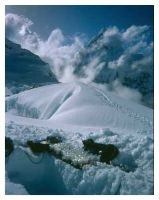 A group of 'Xtreme' medics from London is seeking volunteers for a high-altitude experiment in the highest mountain in the world: Mount Everest. It is well known, especially to the mountaineers, that it's hard to breathe in higher altitudes due to shortfall of sufficient oxygen. The air is so thin at high levels that the amount of oxygen present is almost zero. It does not matter how much air anybody sucks in, the heart and lungs face pulmonary hypertension. The blood vessels in the lungs squeeze, making the heart work harder, and resulting in heart damage and eventually even death. The UK's Xtreme Everest team, headed by Dr. Mike Grocott of University College London's Institute of Human Health and Performance, would proceed with the voluntary program next year on the slopes of Mt. Everest to learn how the human body is affected in the high altitudes and how the patients facing these problems can be treated. The team is looking for about 208 volunteers with good health to travel to Everest base camp in Nepal, which is 5,300 meters above sea level and take part in experiments designed to find out more about how the human body uses oxygen. Nearly 10 people will attempt to scale the highest peak. The study, which will involve using exercise bikes and others to examine lungs, brain, and heart functions at the base camp, is being conducted by anesthesiologists and intensive care doctors. All the equipment will be carried by the different members of the team. Calling it as a serious project, Dr. Grocott said, “What we're seeking to do is use the low oxygen levels as you go to high altitude as a way of looking at how healthier humans adapt to low oxygen.” The main objective of the expedition is to find out why high altitude climbers face altitude sickness. Common symptoms are fatigue, loss of balance, insomnia, headaches, loss of appetite, and nausea. Grocott anticipates the findings through the project will be helpful to improve the care of patients with low oxygen levels. Volunteers should pay US$4,354 which includes a round-trip ticket from London to Kathmandu and a $946 contribution to scientific research. Admitting the experiment as very risky, Grocott said, "We will consider the expedition a success, firstly, if everyone comes home safely, and only secondarily if we are effective in achieving all our scientific goals." |
|
||||||
Disclaimer: The views and investment tips expressed by investment experts on themoneytimes.com are their own, and not that of the website or its management. TheMoneyTimes advises users to check with certified experts before taking any investment decision. ©2004-2007 All Rights Reserved unless mentioned otherwise. [Submit News/Press Release][Terms of Service] [Privacy Policy] [About us] [Contact us] |


