

Saturday
Oct 13
|
|
||||
|
Saturday Oct 13
|
|||
| |
||||
The Scene of Indian Rocketryby Jyoti Pal - August 3, 2006 - 0 comments
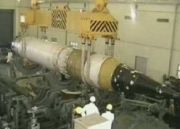 The Agni III launch failure, India’s first attempt at an intermediate range ballistic missile (IRBM) followed by the faulty take off of Geosynchronous Launch Vehicle (GSLV-F02) INSAT-4C from the new launchpad at the Satish Dhawan Space Centre has raised questions on yet another aspect: the capability of the Indian rocketry. Agni-III was ready for launch in 2004-end, however the test firing was not done. Political and technical reasons were cited for the same. Circa 2006: Agni III developed a snag and found its watery grave in the Bay of Bengal. A successful launch of the 3500 km range Agni III would have meant that India had the nuclear power to strike as far as eastern China. On the other hand, INSAT-4C, the more than 2000 Kg satellite would have enhanced India’s telephone and business communications. A successful launch of the latter would have enabled India to market its launch services much the same way as Europeans and Americans do. The failure of Agni III launch has run the Indian missile programme into rough weather with only the Prithvi missiles being operational and that too with their own set of limitations. Being liquid fueled; they require a longer lead time and can be fired only in a short range of 150-300 km circle. The more convenient ones Agni I and Agni II can fire at a range of 700-1500 km and as they draw their power from solid fuel they do not require a pre launch time thus being more popular in the Indian Army. Despite a dozens of test they are still not completely operational. A successful launch would surely have reduced the nuclear asymmetry between India and its neighbors and would have made the world stand up and take note of India’s nuclear capabiities. |
|
||||||
Disclaimer: The views and investment tips expressed by investment experts on themoneytimes.com are their own, and not that of the website or its management. TheMoneyTimes advises users to check with certified experts before taking any investment decision. ©2004-2007 All Rights Reserved unless mentioned otherwise. [Submit News/Press Release][Terms of Service] [Privacy Policy] [About us] [Contact us] |



